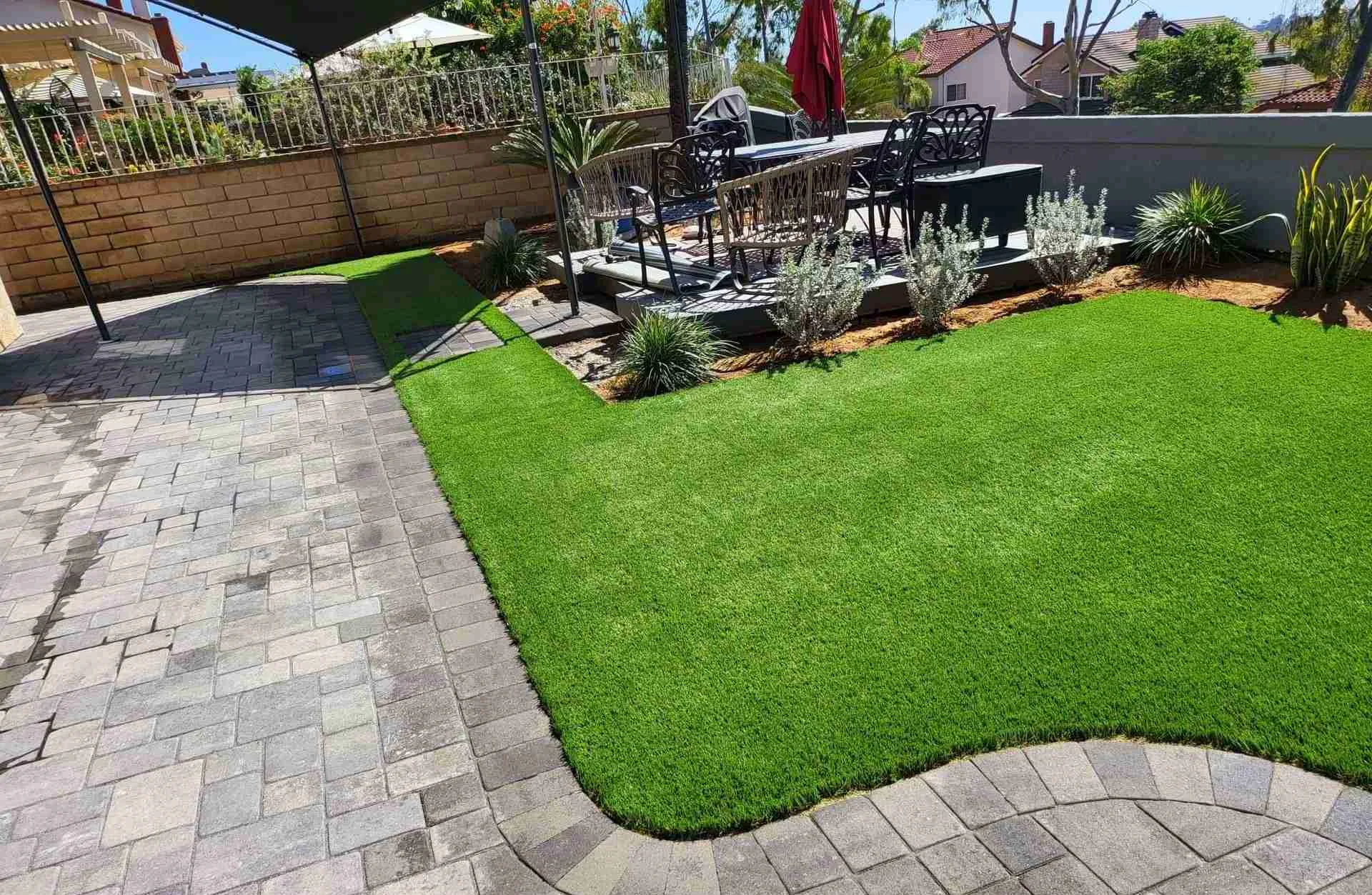
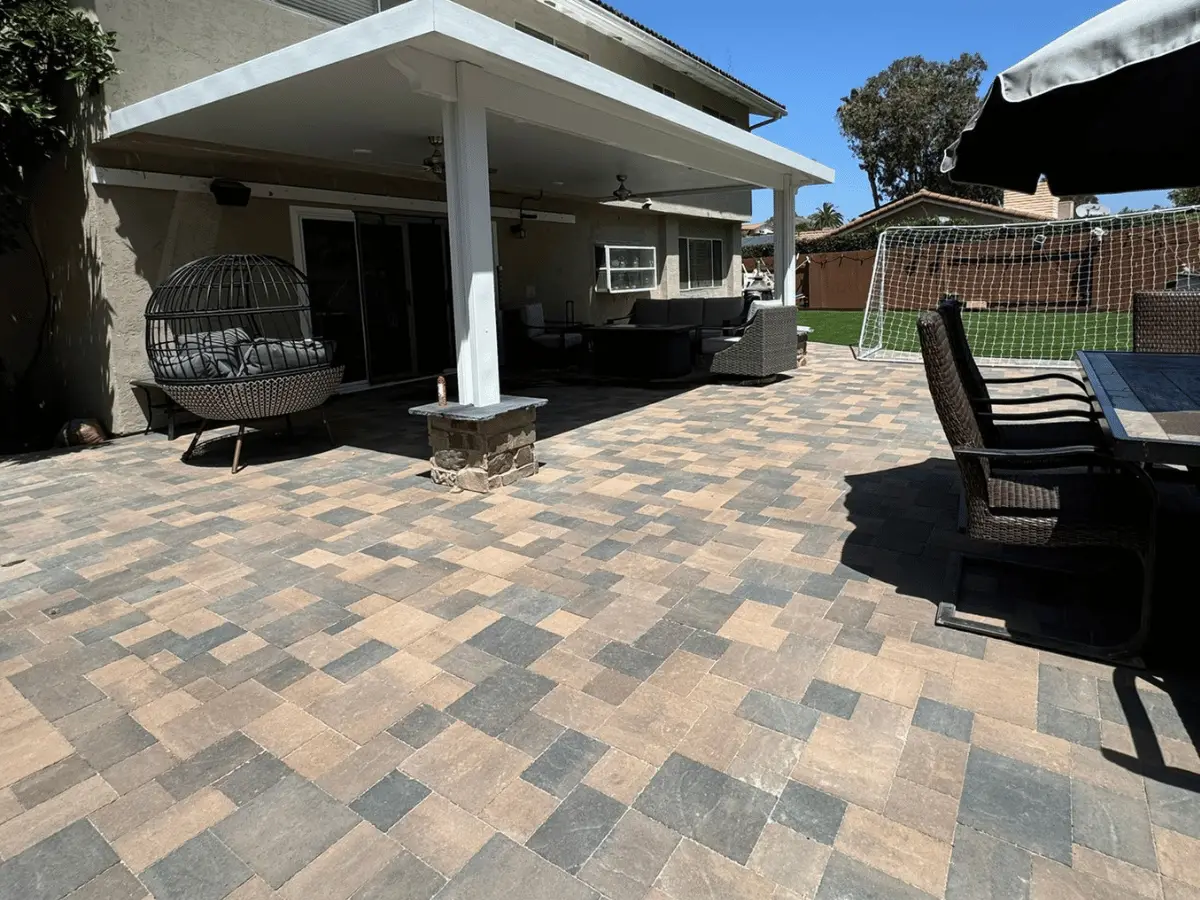
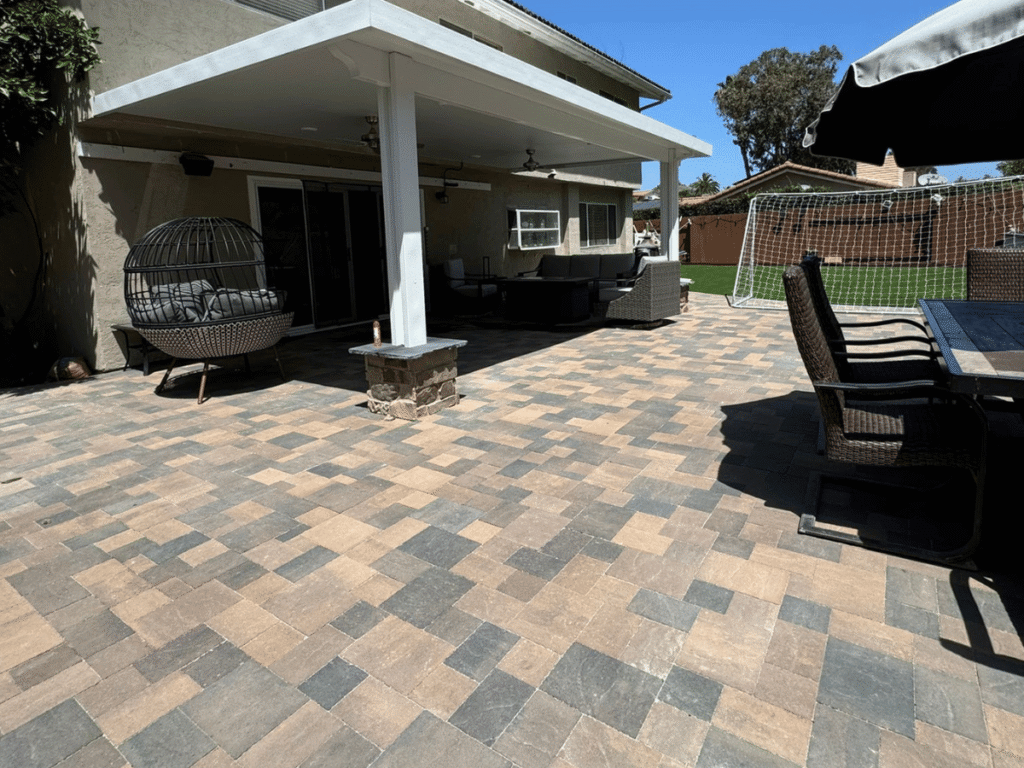
How Much Does a Paver Patio Cost in San Diego?
Paver patio pricing varies wildly online because it depends on your yard, not a formula. Here is what actually drives the cost and how to get a number you can trust.
Read the guide
Pavers live or die by what is underneath them. We excavate to the right depth, compact the base in lifts, and set proper edge restraint, because a patio that stays flat for twenty years is built from the ground up, not the surface down.
Driveways, patios, walkways and pool surrounds across San Diego County, in everything from standard concrete pavers to large-format porcelain and natural stone.
Free in-home consultation · Same-day reply
Old surface out, grade set for drainage away from the house.
Class II base compacted in lifts, screeded bedding sand, no shortcuts.
Concrete or steel restraint so the field never spreads or ruts.
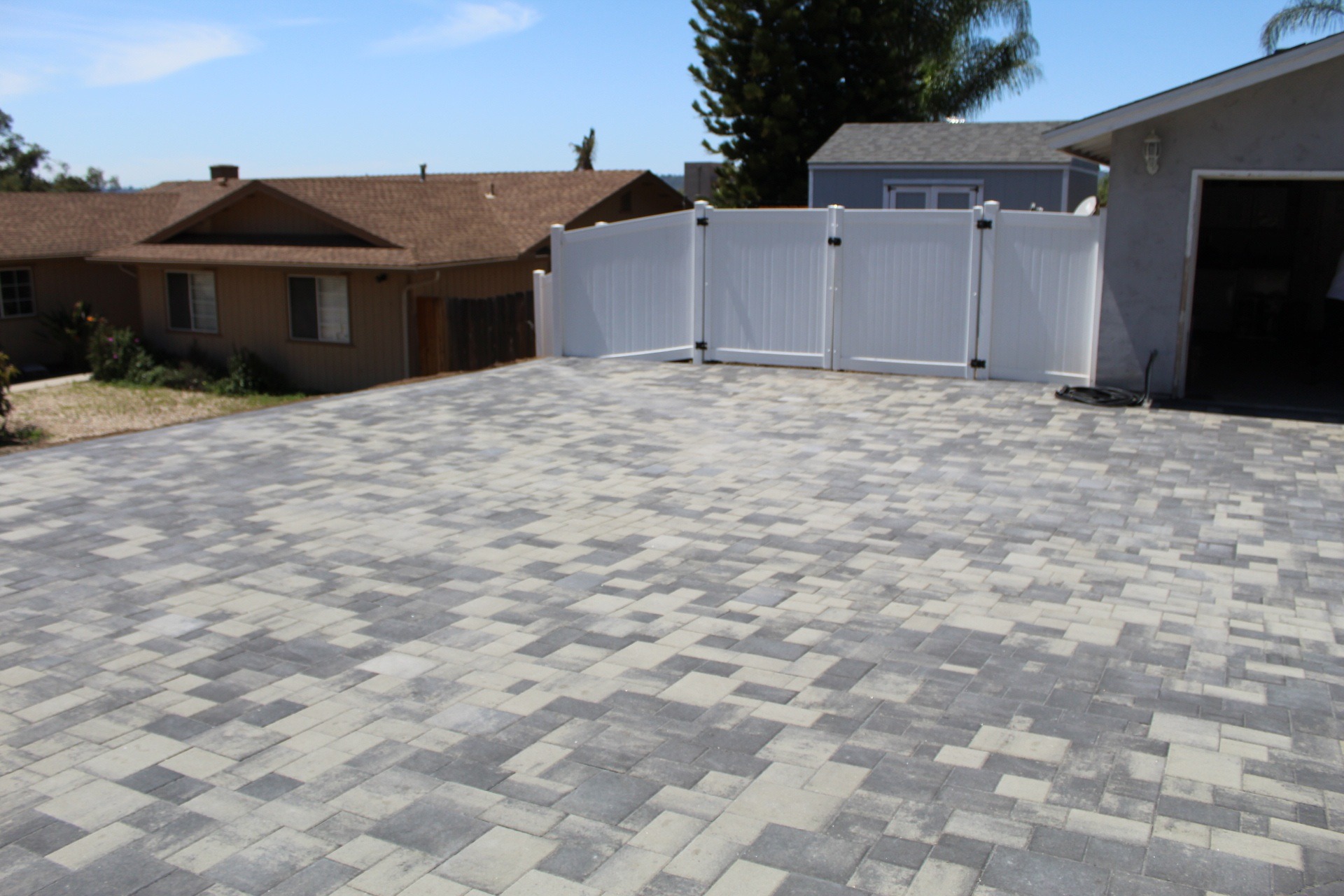
Thicker profiles and base depth where cars park and turn.
Paver bands and turf inlays planned together, not patched later.
Polymeric sand, final plate compaction and a clean site at handoff.
We meet at your home, measure, talk budget and what you want out of the yard. The in-home consultation is free; your written quote follows in 2-3 days.
You get a clear scope and a written quote: what we build, the materials, and the price. No surprises mid-build.
Our own local crew does the work, from grading and hardscape to turf, walls and kitchens, with one point of contact throughout.
We walk the finished yard together and only call it done when you do.
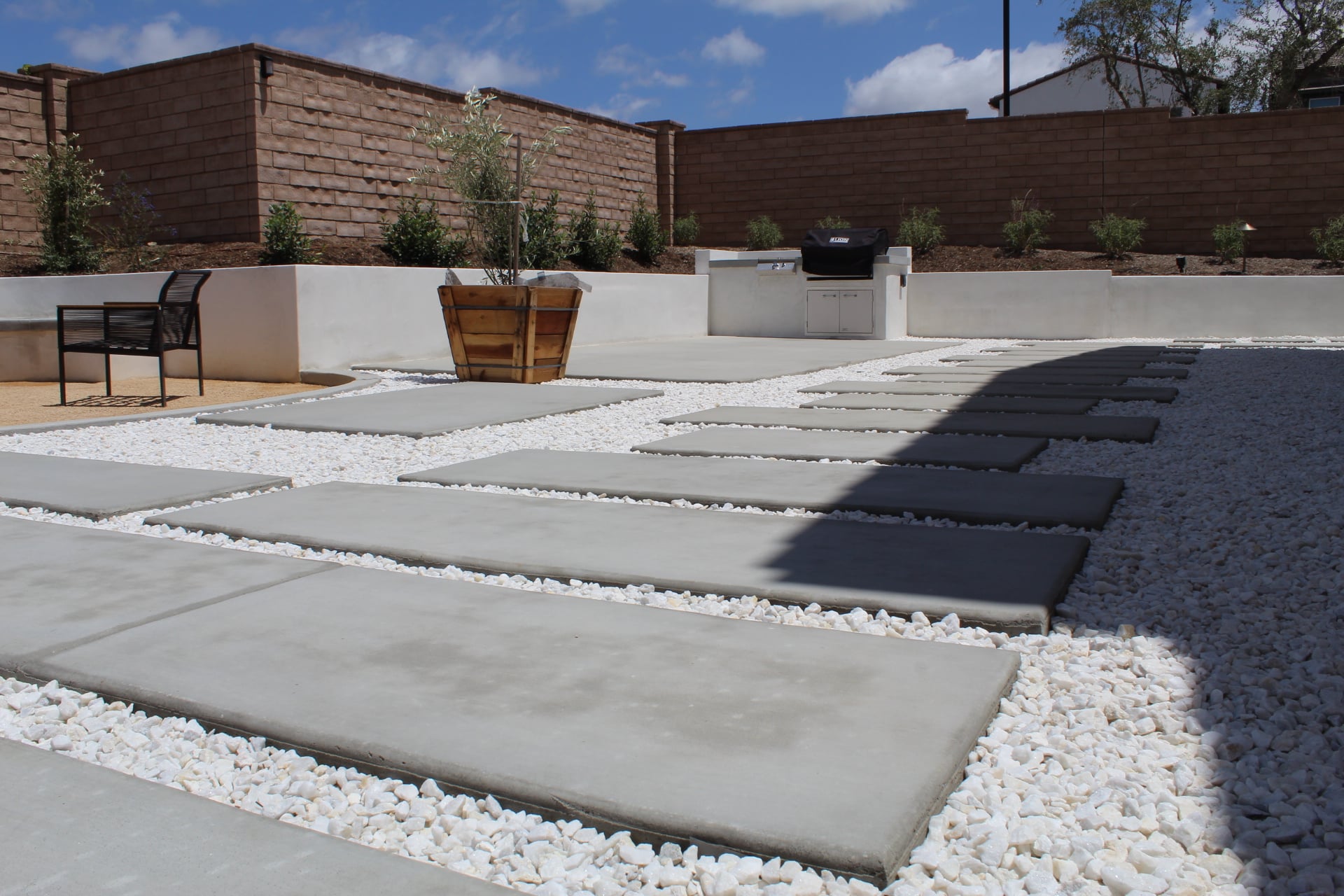
Concrete pavers, porcelain pavers and natural stone all install on the same base system but behave differently once they’re down. Concrete pavers come in the widest range of colors, textures and price points, and they’re the easiest to source a matching replacement for years later. Porcelain pavers are color-through, so a scratch or chip doesn’t reveal a different shade underneath, and they resist staining better than either alternative. Natural stone gives you real variation, no two pieces alike, at the cost of more careful sealing.
Pattern matters as much as material. Running bond and basketweave are straightforward, economical layouts that suit patios and walkways well. Herringbone interlocks each paver against its neighbors on two axes, which is why it shows up wherever vehicles or heavy foot traffic cross the surface. Mixed-format layouts, borders in a contrasting color, and soldier-course edging all add visual interest without changing the base system underneath. The honest trade-off: more complex patterns take longer to lay and cost more in labor, not material.
Beyond standard concrete pavers, two premium materials come up often in San Diego yards. Porcelain pavers are kiln-fired to an extremely dense, color-through body: they resist stains and fading better than concrete, stay relatively cool underfoot in lighter tones, and shrug off salt and chlorine, which makes them a strong fit near pools and along the coast. The trade-offs are a higher material cost and the need for an installer experienced with how the large, precise format is set.
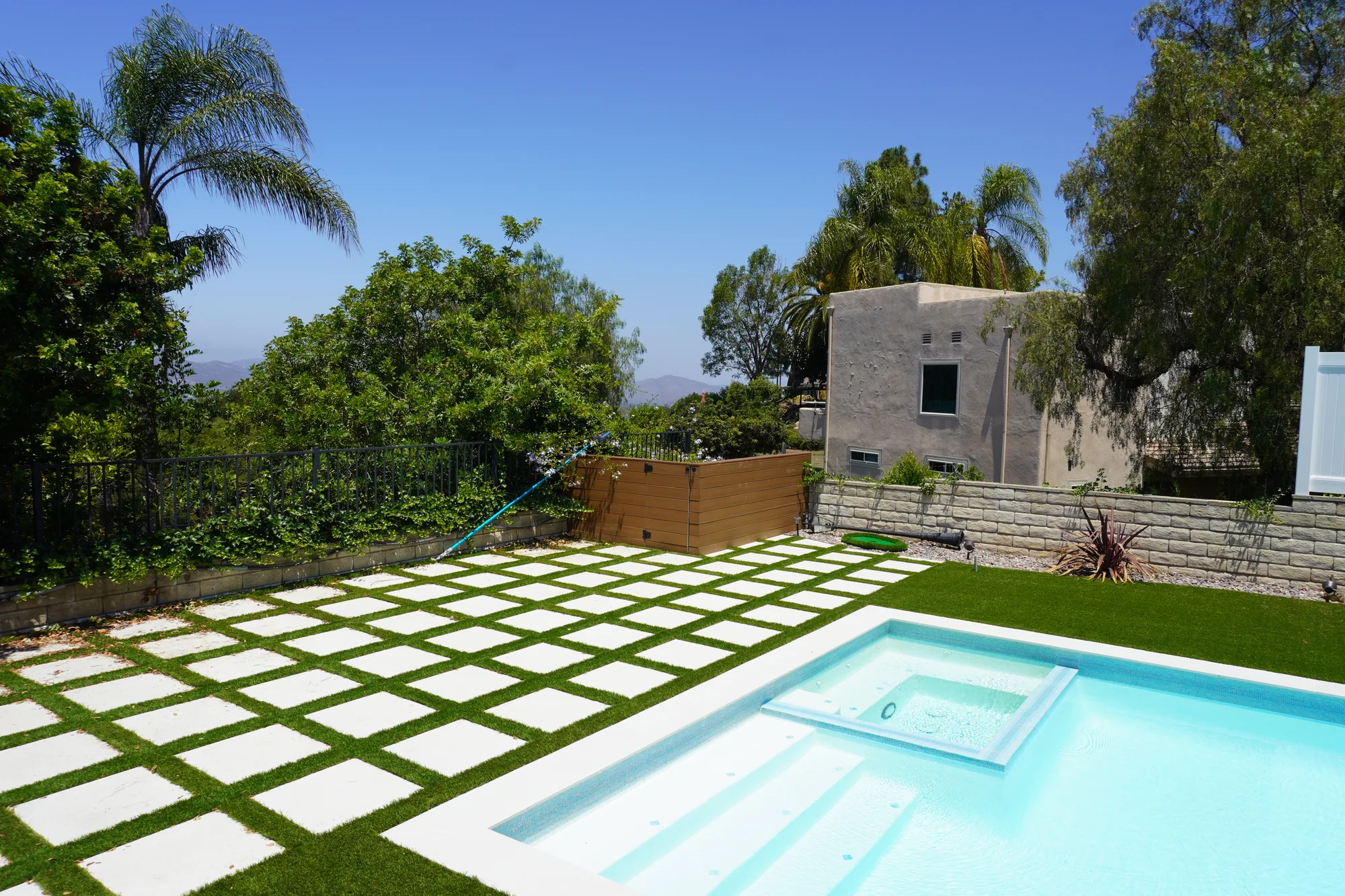
Travertine is a natural stone with a naturally pitted surface that stays cool in the sun and grips well when wet, which is why it is a longtime favorite for pool surrounds and patios. It carries the warmth and variation of real stone, at a cost that sits above concrete pavers and, like most natural stone, needs sealing to resist staining and salt near the coast. Concrete pavers remain the most economical and the easiest to source a match for years later; porcelain and travertine buy you a higher-end look and better heat and stain performance for a higher price band. We bring samples so you can compare them in your own light before choosing.
Square footage sets the baseline, but access changes the math fast. A backyard patio reachable by wheelbarrow costs less to build than the same patio behind a locked side gate that forces everything to be hand-carried. Demolition adds another variable: removing an old concrete slab takes more time and disposal effort than starting from bare dirt or existing gravel. None of this shows up in a quick online calculator, which is why a proper quote starts with someone walking your site.
Base depth and material grade move together. A patio needs less compacted base than a driveway or a stretch of paving that vehicles will cross, and thicker pavers or driveway-rated units cost more than standard patio stock. Slope is the quiet factor: a yard that pitches toward the house needs regrading before a single paver goes down, and that earthwork is priced separately from the paving itself. Ask any contractor to break these line items out in writing.
Much of San Diego County sits on expansive clay or decomposed granite soils, both of which shift with the seasons. A flexible paver system, built on a properly compacted base, moves with that soil instead of cracking against it, which is the main advantage pavers hold over a rigid slab in these conditions. Coastal properties add a second variable: salt-laden air accelerates corrosion on unprotected metal edge restraint, so what holds the border matters as much as what’s inside it.
Drainage design has to account for San Diego’s rain pattern: long dry stretches followed by intense winter storms that arrive all at once. Pavers are permeable at the joints, which helps water infiltrate rather than sheet across a patio into the house. Grading away from the foundation is still required by code and by common sense. Some jurisdictions and HOAs also have their own material, color and drainage requirements, so it’s worth confirming those before you fall in love with a specific product.
Base depth and compaction method separate a paver installation that lasts decades from one that ripples within a few seasons. Ask what base material is being used, how many lifts it’s compacted in, and what equipment does the compacting. Ask how edge restraint is anchored, since an unrestrained field of pavers will spread under foot traffic no matter how well the individual pavers are set. These are the questions that matter more than the paver brand on the box.
Also ask what happens if a paver settles or a stain won’t lift: can it be pulled and relaid without disturbing the rest of the field, and does the crew keep extra material from your run for exactly that reason. A contractor who answers specifically, not generally, is usually the one who has done the work before. That’s a better signal than any brochure.
Want a number before we talk? Book a free in-home consultation and get an exact written quote.
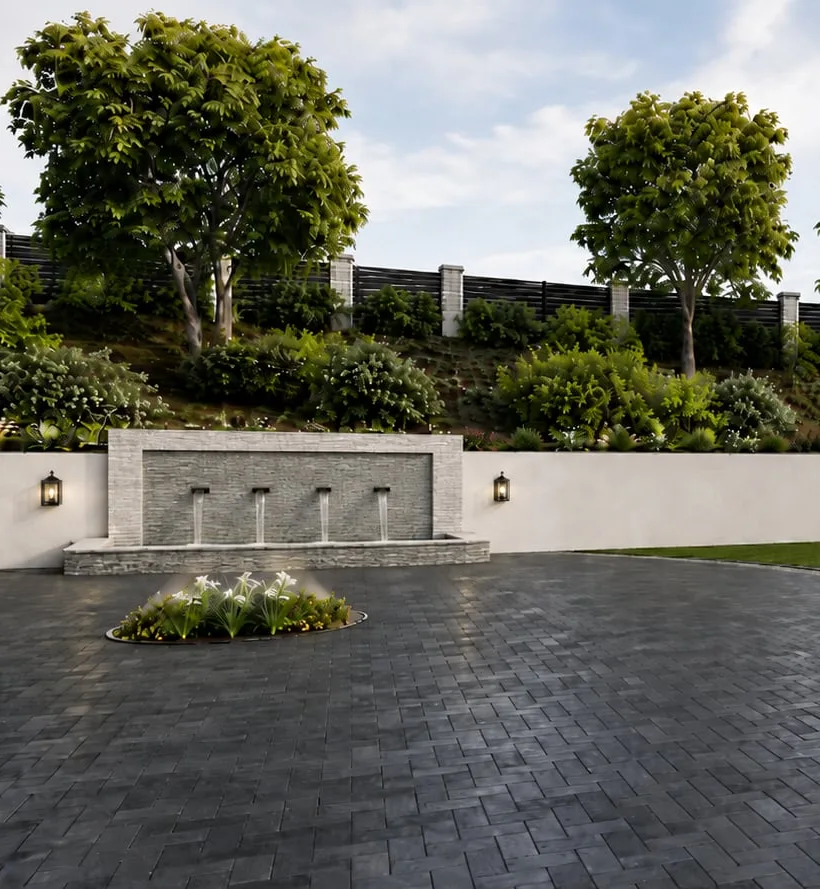
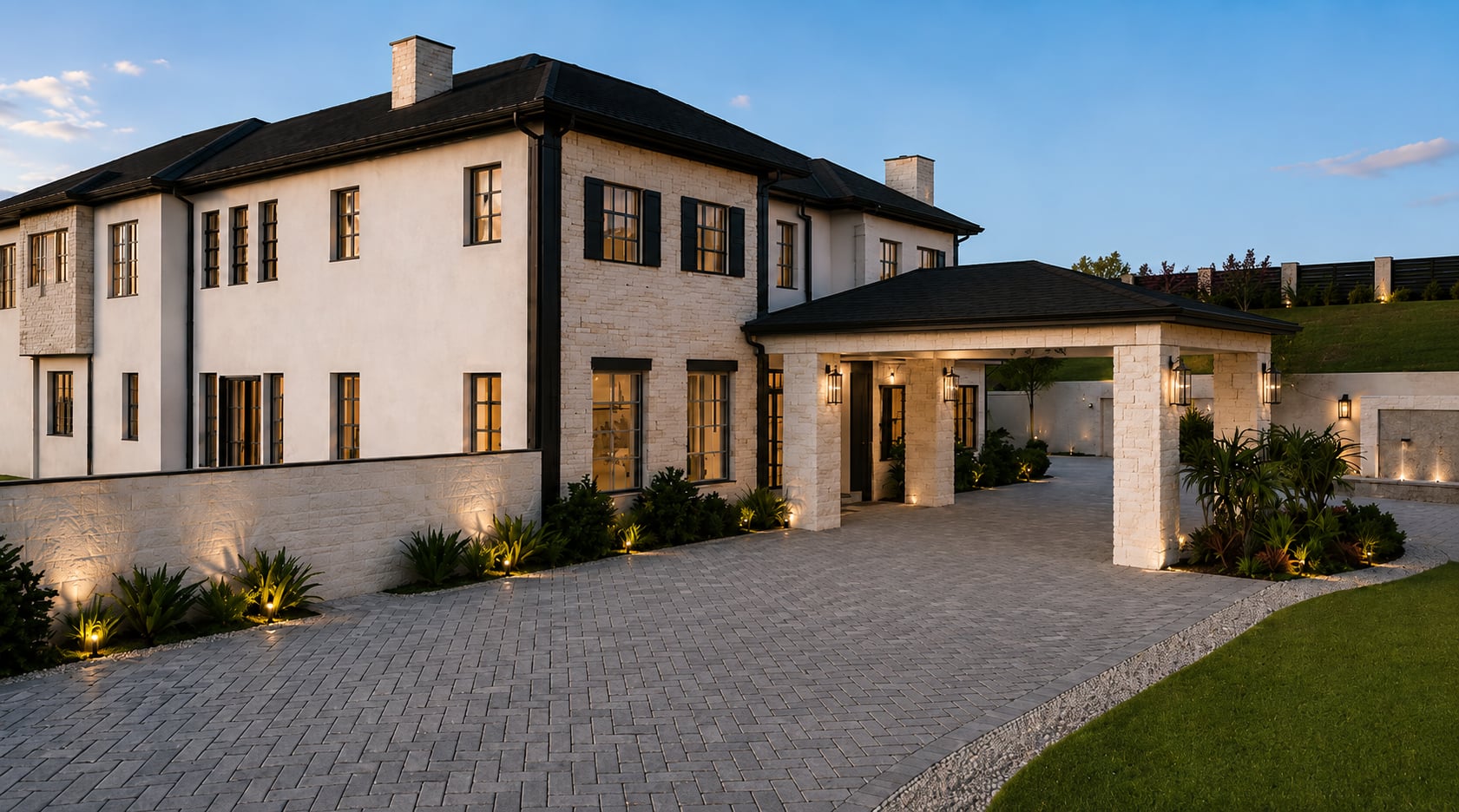
Book My Free ConsultationBefore a single paver moves, we build your yard in 3D. The designs below are real ones we delivered to Sunny Builders clients: you see the layout, the materials and the lighting from every angle, and change your mind before anything is poured. The 3D design and rendering are included when you build the project with us.
We had a great experience with Sunny Builders. They just completed the first project for us, revamping our front yard. They were very efficient; just 2 days ago, our yard had was all weeds and dirt. We left the design to Sunny Builders and they made it look better than we imagined. They did the job quickly and at a very reasonable price with no surprise fees. I would definitely recommend them and we'll be using their services again.
We recently had our side yard completely redone, and the experience with Sunny's Builders was incredible from start to finish. I was a bit nervous at first about hiring a company I found online, but I'm so glad I did. They exceeded every expectation! Our side yard looks incredible, and the entire process was smooth, professional, and stress-free. The team was professional, communicative, and truly cared about every detail. They transformed a space we had ignored for years into something beautiful and functional. We couldn't be happier with the results and highly recommend them to anyone looking for quality work and a stress-free process!
We had a GREAT experience with Sunny Builder's Group! From Rachel, our first contact, to Roei and his crew of workers, these folks did an amazing job accommodating us on short notice and transforming our side yard into a beautiful outdoor living space. They completed the job in only 8 days, from first call and appointment to assess the project, to finishing the job! Roei and his men were honest, professional, and paid great attention to detail in creating a lovely functional area for us to get the most out of our small yard. We would highly recommend them for any job, large or small and will definitely contact them in the future for additional projects!
From the coast to the foothills. Find your city on the plan, or in the list below.
We build across all of San Diego County and Temecula Valley.
They cost more upfront but resist cracking, drain better, and repair invisibly: lift the affected pavers, fix the base, relay. A slab crack is forever; a paver repair disappears.
Most residential patios take days, not weeks, once material is on site. Your written quote includes the schedule for your specific project.
Yes, when built on a driveway-rated base depth with proper compaction and edge restraint. That base difference is exactly why driveway and patio pricing differ.
Concrete pavers are cast and cured, with a wide range of colors and the lowest cost per square foot. Porcelain pavers are kiln-fired at high heat, which makes them denser, more stain-resistant and color-through, so a chip doesn't show a different shade beneath the surface. Porcelain also comes in larger formats for a more contemporary look. The trade-off is a higher material cost and a narrower range of installers experienced with it.
Sometimes, if the existing slab is structurally sound, properly sloped and free of major cracking, pavers can be set on a bedding layer over it. But a compromised slab underneath will eventually telegraph its problems through the new surface, so we assess the base before recommending an overlay instead of a full removal and rebuild.
Polymeric sand in the joints is the main defense: it hardens after it's swept in and watered, which resists both weed germination and ants. A properly compacted base also removes the loose material weeds need to root in. No system is permanently weed-proof, but a well-built paver field needs very little upkeep compared to a jointed material laid on sand alone.
Concrete pavers benefit from sealing, it deepens the color and makes stains easier to wipe off, though it isn't strictly required for the pavers to perform. Natural stone often needs sealing to resist staining and efflorescence. Porcelain pavers are dense enough that sealing isn't necessary. We'll tell you honestly whether your chosen material calls for it.
Travertine is one of the most popular pool-deck materials for good reason: its naturally pitted surface stays cooler underfoot than many alternatives and grips well when wet, both of which matter around a pool. It is a natural stone, so it costs more than standard concrete pavers and needs periodic sealing to resist staining and salt exposure, especially near the coast. For a lot of San Diego yards the cooler surface and natural look are worth the added care.
Yes, porcelain pavers generally sit in a higher price band than standard concrete pavers, both for the material itself and because the large, precise format takes more care to install. What you get for the difference is a denser, color-through surface that resists stains, fading and salt better, and stays cooler in lighter colors. Whether that trade is worth it depends on where the pavers are going and how the surface will be used, which we talk through honestly before you commit.
Warranty length follows the material we install: pavers 15-Year. That is our workmanship warranty on the installation, written into your contract, and we walk through exactly what it covers on your project at the in-home consultation.
Paver patio pricing varies wildly online because it depends on your yard, not a formula. Here is what actually drives the cost and how to get a number you can trust.
Read the guide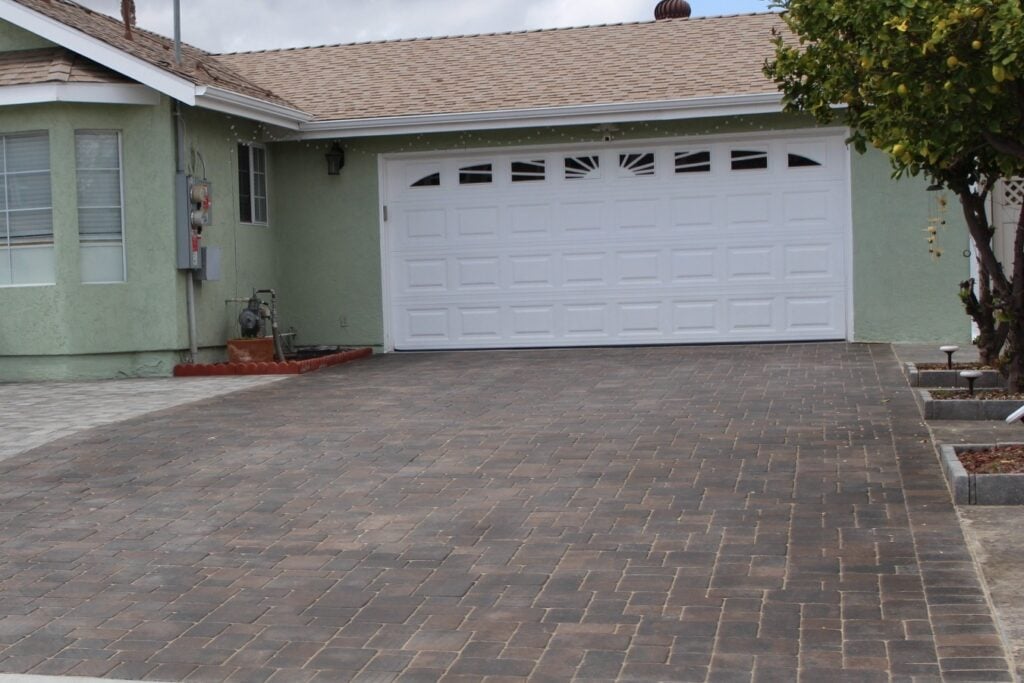
Pavers or poured concrete for your San Diego driveway. A straight comparison of durability, repair, curb appeal, maintenance and how local soil and heat affect each one.
Read the guideSend the form and we’ll call you back to book your free in-home consultation. Or skip the form entirely:
(858) 888-1725