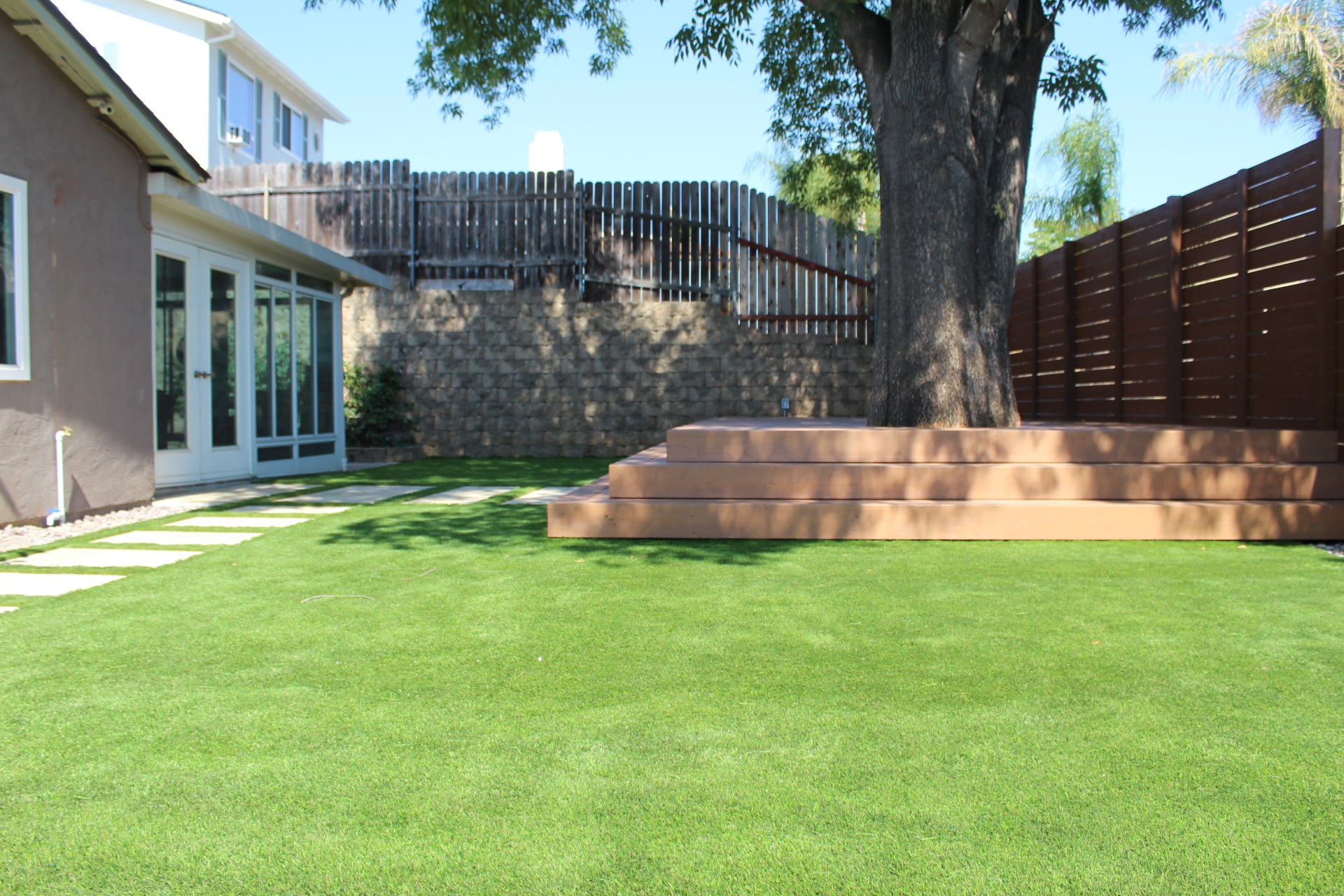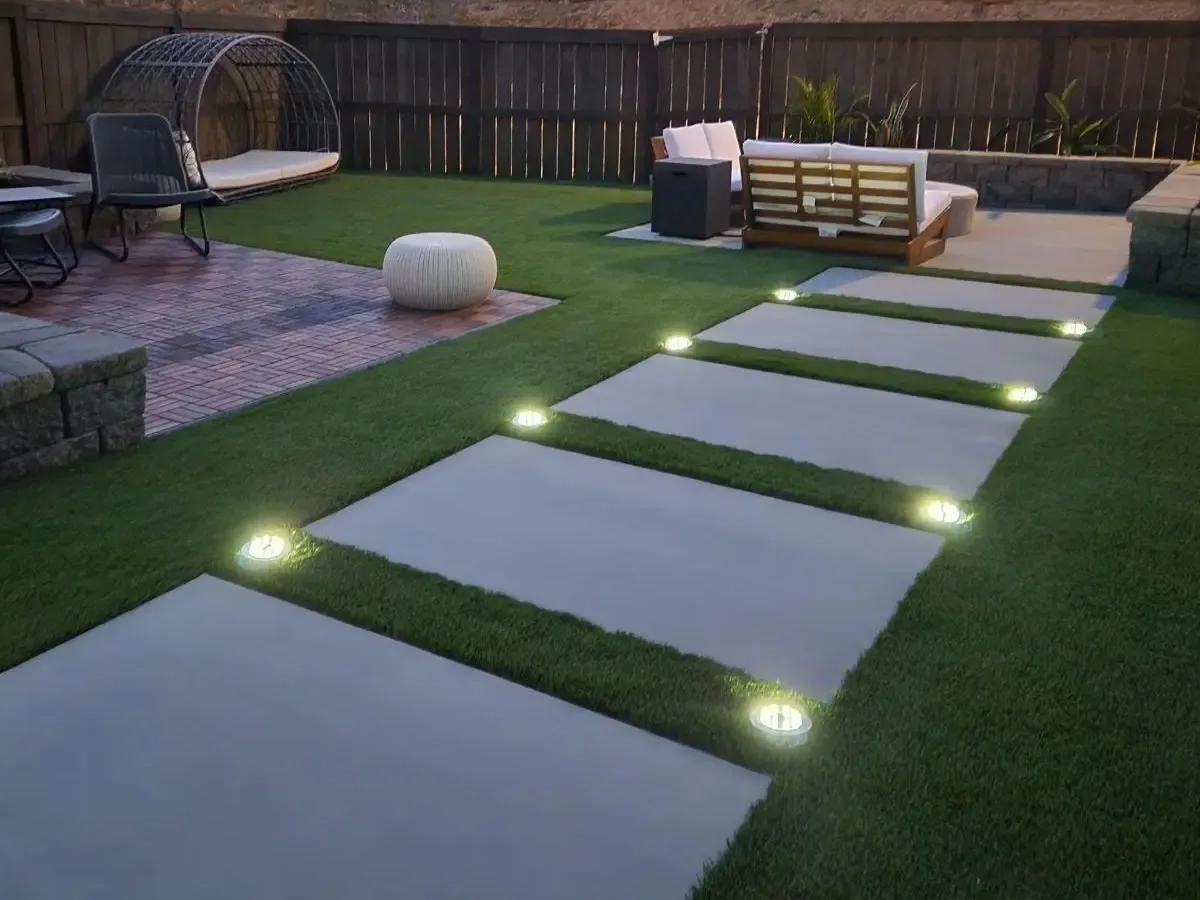
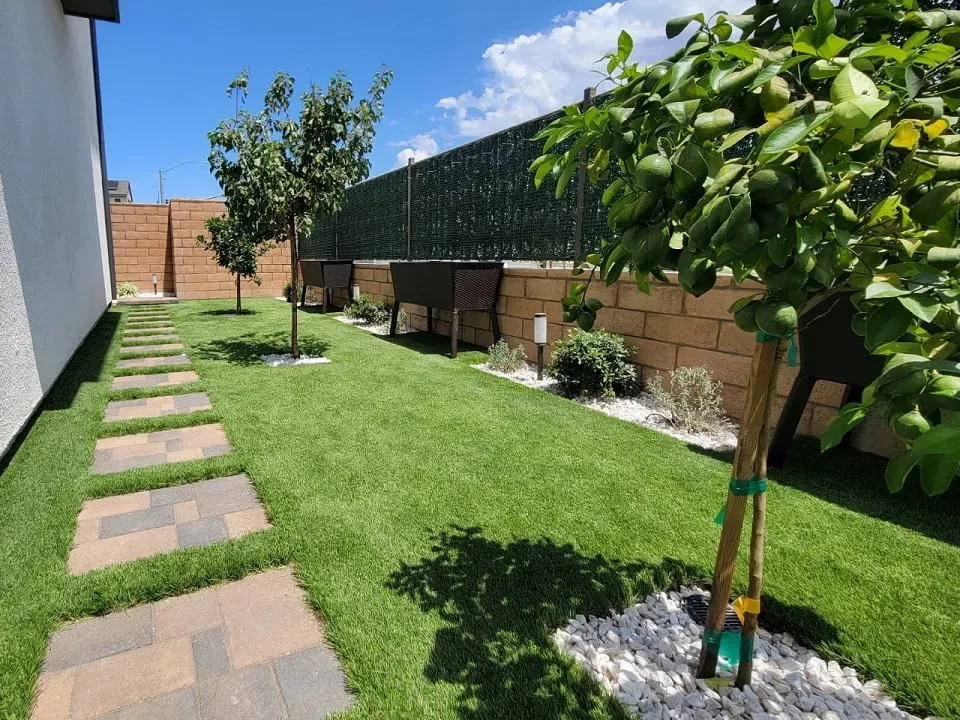
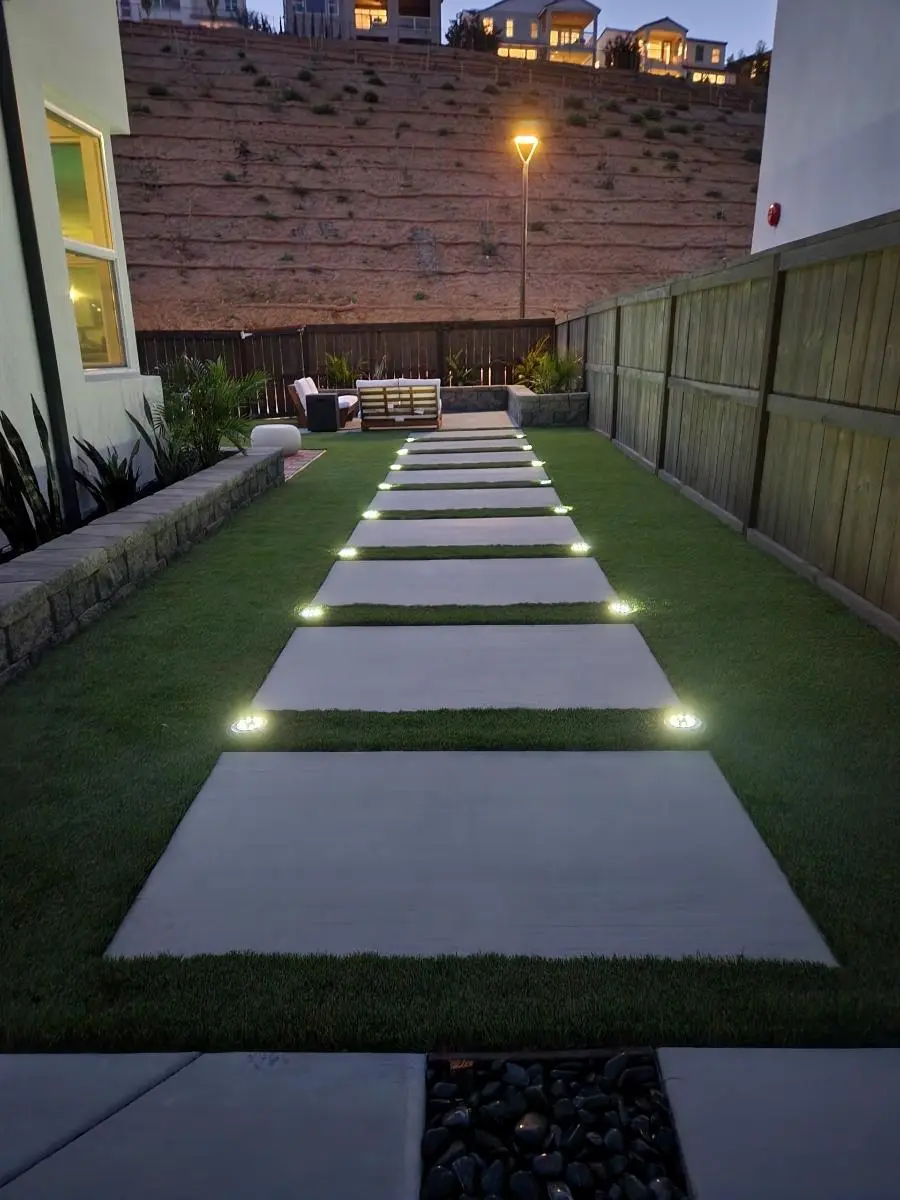
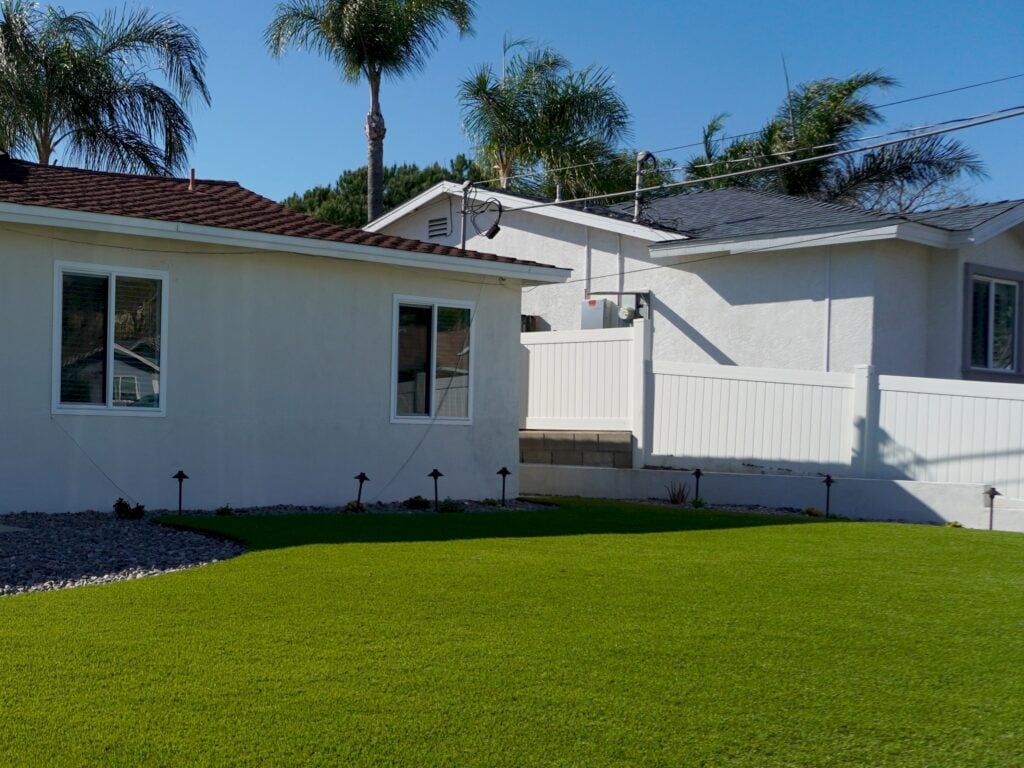
Artificial Turf vs. Real Grass in San Diego: An Honest Comparison
A straight, no-marketing comparison of artificial turf and real grass for San Diego yards, covering water, upkeep, heat, pets and kids, and when real grass still wins.
Read the guide
San Diego landscapes have to look good on a water budget. We design planting, turf, hardscape and irrigation as one system that fits the climate here instead of fighting it.
From full-yard transformations to refreshing tired planting beds, the goal is a landscape that looks intentional in year one and better in year five.
Free in-home consultation
Climate-right plants arranged for structure, color and low upkeep.
Real or artificial turf where it earns its water and maintenance.
Hardscape bones that keep beds crisp and circulation dry.
Drip zones, smart controllers and drainage planned per bed.
Low-voltage lighting and mulch or rock finishes that complete the look.
We meet at your home, measure, talk budget and what you want out of the yard. The in-home consultation is free; your written quote follows in 2-3 days.
You get a clear scope and a written quote: what we build, the materials, and the price. No surprises mid-build.
Our own local crew does the work, from grading and hardscape to turf, walls and kitchens, with one point of contact throughout.
We walk the finished yard together and only call it done when you do.
Most San Diego landscapes lean on a mix of Mediterranean and California native plants because both handle long dry stretches without constant watering. Native plantings tend to be tougher and cheaper to maintain long term, while Mediterranean varieties often give you more color and a fuller, more manicured look. Neither choice is wrong. The right answer depends on how formal you want the yard to read and how much hands-on care you actually want to do.
Irrigation is where a lot of yards quietly fail. Drip irrigation delivers water straight to the root zone and wastes very little, which makes it the default for planting beds. Rotary nozzles or spray heads still make sense for real turf areas that need even coverage. A smart controller that adjusts run times to weather adds another layer of savings, but only if the zones underneath it were designed correctly in the first place.
A water feature adds sound and movement that planting alone cannot, and in a dry climate the low-water, recirculating kind fits San Diego well. A fountain is the simplest: a self-contained basin that recirculates the same water, easy to place on a patio or in a planting bed. A pondless waterfall sends water over stone into a hidden underground reservoir and pumps it back up, giving the sight and sound of a stream with no open pond to maintain and no standing water.
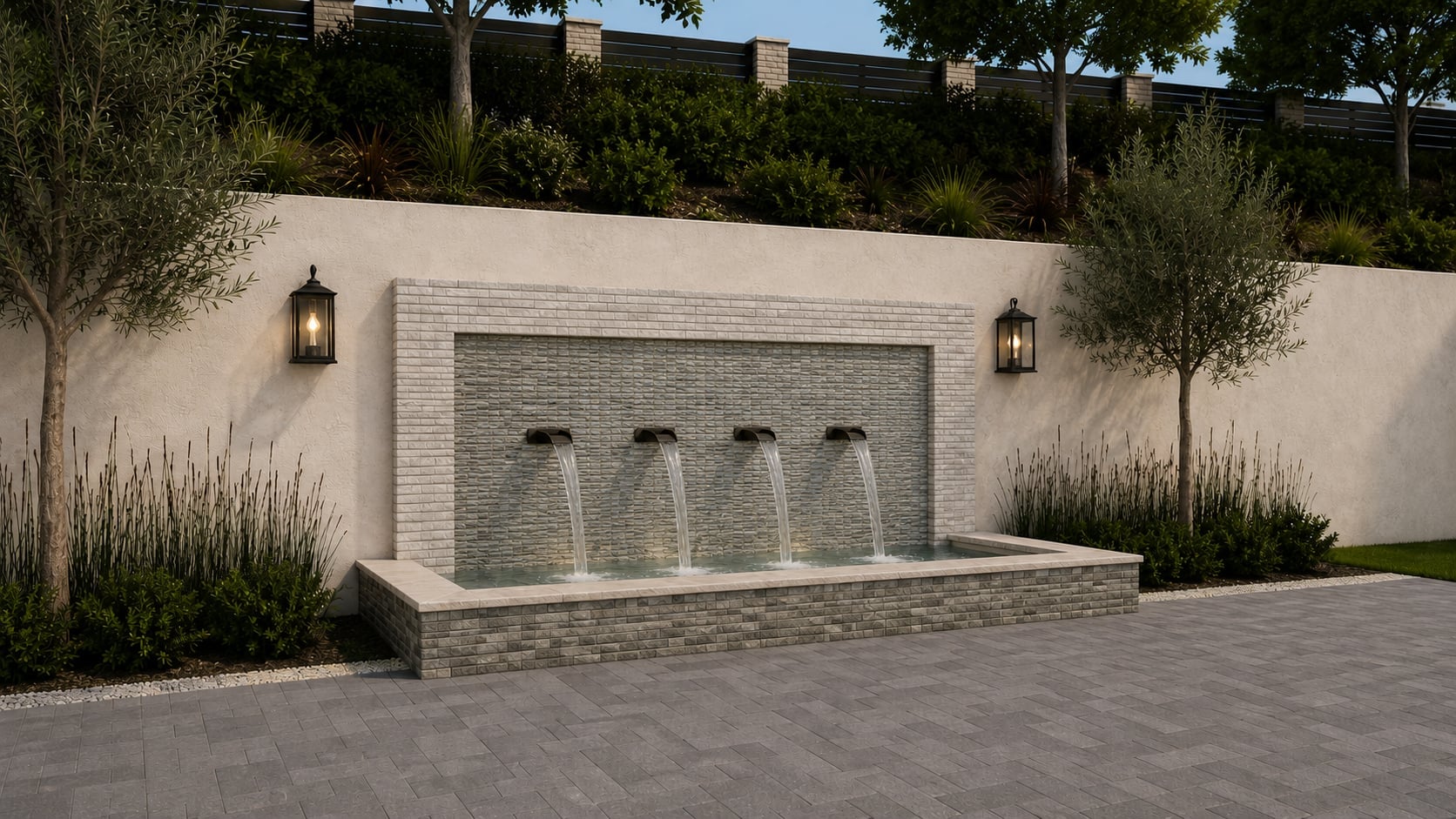
A water wall or sheet fountain runs water down a flat vertical face for a clean, modern look that suits contemporary yards and courtyards. All three run on recirculating systems that reuse the same water rather than drawing continuously, so the ongoing water use is modest, mostly topping off what evaporates, which is what makes them a sensible fit for a drought-conscious San Diego landscape. We design the feature into the planting and hardscape so it looks intended, not parked in a corner, and size the reservoir and pump to keep maintenance low.
Size is the obvious factor, but access matters just as much. A yard reachable only through a narrow side gate means more hand labor and slower material staging than one a skid steer can drive straight into. Demolition adds another variable: pulling out an existing lawn, old concrete, or overgrown planting beds takes real time before any new design work can start, and that groundwork rarely shows in the finished photos.
Grading and drainage complexity change the scope fast, especially on sloped lots or yards that already pool water after rain. The grade of material you choose, from basic groundcover to specimen plants and natural stone, moves cost too. Irrigation complexity is the last piece: retrofitting old, poorly zoned systems is more involved than laying out fresh lines in a yard that is starting from bare dirt.
San Diego County is not one climate. Coastal yards get a marine layer that keeps things cool and humid through the morning, which favors different plants than the hot, dry afternoons inland neighborhoods see by early summer. A design that works two miles from the water can struggle badly ten miles inland, which is why a good plan starts with where your specific lot sits, not a generic plant list.
Soil varies just as much as climate does. Inland lots often sit on heavy clay or adobe that drains slowly and needs amending before anything long-lived goes in the ground. Coastal and canyon-adjacent soils can drain too fast in the other direction. Water-use rules and rebate programs shift from year to year across the county, so it is worth checking current incentives before finalizing an irrigation or turf conversion plan.
Sequence matters more than most homeowners expect. Grading, drainage and irrigation lines need to go in before planting, not after, because reworking soil around plants you have already installed usually damages them. Hardscape like paths, borders and low walls should also be set before the planting design goes in, since beds are shaped around those permanent lines rather than the other way around.
If budget means the whole yard cannot happen at once, phase by zone instead of by task: finish the front yard as a complete system, then move to the backyard later, rather than doing all the irrigation sitewide and leaving planting for another year. A written itemized quote from your landscape contractor should make the phases and what each one includes clear before any digging starts.
Want a number before we talk? Book a free in-home consultation and get an exact written quote.
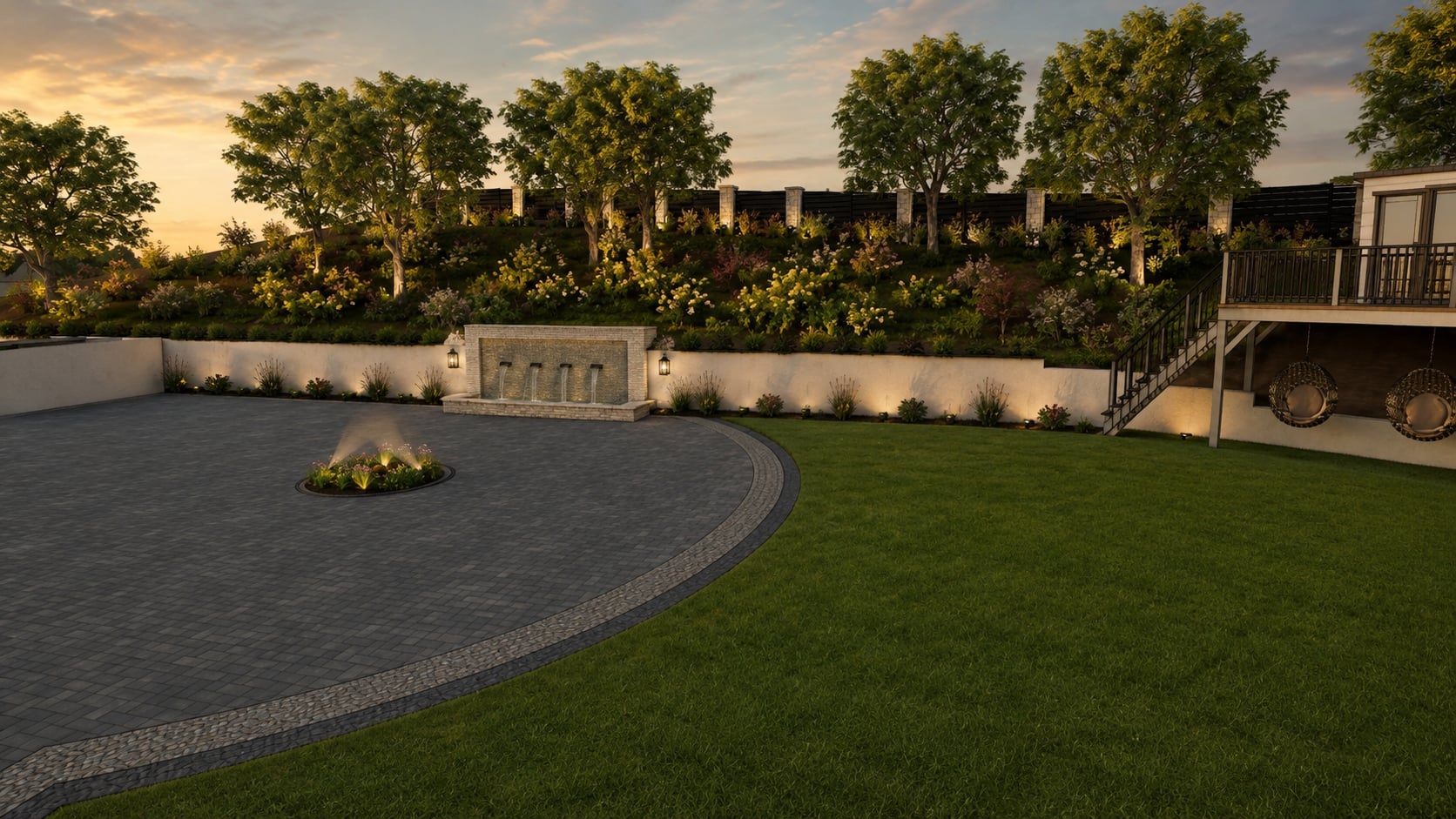
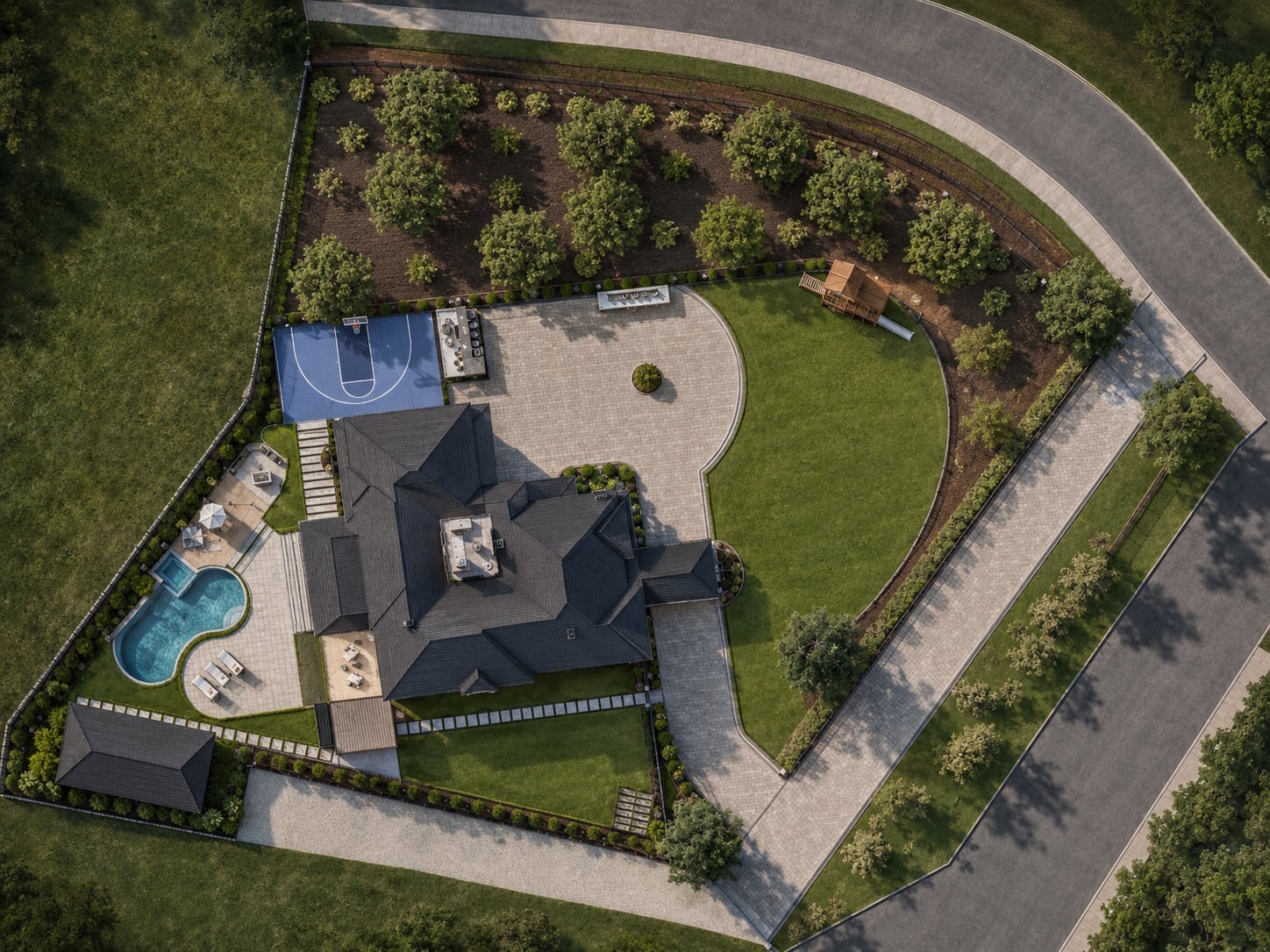
Book My Free ConsultationBefore a single paver moves, we build your yard in 3D. The designs below are real ones we delivered to Sunny Builders clients: you see the layout, the materials and the lighting from every angle, and change your mind before anything is poured. The 3D design and rendering are included when you build the project with us.
Sunny Builders completely transformed our front yard from a high maintenance, high water consumption yard to an absolute drought tolerant, dream garden space. From concept design thru implementation to completion it all came together beautifully. The attention to detail of plant location, irrigation & drainage needs was far more than I expected. The crew arrived right on time every single day, worked incredibly hard, and treated our property with total respect. They even cleaned up the work area completely before leaving each night. The entire project was completed on time & on budget. We could not be happier and give them our highest recommendation!
We recently hired Sunny Builders to build our backyard BBQ area, and the results are fantastic. They helped bring our vision to life and created a beautiful, functional outdoor space that our family enjoys every week. The crew was punctual, respectful, and maintained a clean worksite throughout the project. Their expertise and dedication were evident in every step of the process. We have received so many compliments from friends and neighbors. Highly recommended!
I had an excellent experience with Sunny Builders San Diego. From the initial consultation to the final installation, the team was professional, responsive, and attentive to every detail. My new kitchen turned out even better than I imagined. The quality of the workmanship is outstanding, the project was completed on time, and communication throughout the process was excellent. I highly recommend them to anyone looking for a reliable and skilled contractor for a kitchen remodel. Thank you for transforming my kitchen into a beautiful and functional space!
From the coast to the foothills. Find your city on the plan, or in the list below.
We build across all of San Diego County and Temecula Valley.
Yes, most of our planting palettes are low-water by default. San Diego rewards it in both water bills and plant survival.
Yes. Scopes range from single beds to full-property redesigns; the written quote makes the scope explicit either way.
Depends on use, shade and your appetite for maintenance. We install both and will tell you honestly which fits your yard.
No. Xeriscaping just means designing a landscape around low water use, and that usually still means a full planting palette of drought-tolerant shrubs, grasses and groundcovers. Gravel and decomposed granite show up as pathways or mulch, not as a replacement for plants. A well-done xeriscape can look as lush as a traditional yard while using a fraction of the water.
It depends on the scope. Planting, mulch and most drip irrigation typically do not require a permit. Retaining walls above a certain height, major grading, and some electrical work for lighting or controllers usually do. We handle the permit question as part of the design process so you are not guessing which parts of your project need one.
Standing water after rain, soggy patches days after a storm, or water running toward your house instead of away from it are the clearest signs. Sloped lots and yards with heavy clay soil are especially prone to this. A site visit is the fastest way to tell whether you need a simple drain or a broader regrade before any planting or turf goes in.
Hardscape covers the fixed, non-living elements: paths, patios, borders, walls and structures. Softscape is everything living, from turf and shrubs to trees and groundcover. A good design plans both together from the start, since hardscape lines usually define where planting beds sit and how water moves through the yard.
Less than most people assume. Fountains, pondless waterfalls and water walls run on recirculating systems that reuse the same water continuously rather than drawing fresh, so the ongoing use is mainly topping off what evaporates. A pondless design has no open pond sitting in the sun, which reduces evaporation further. Paired with drought-tolerant planting, a recirculating water feature fits a low-water San Diego landscape without undoing its water savings.
A pondless waterfall sends water over stone and disappears into a gravel-filled underground reservoir, where a pump sends it back to the top to run again. Because there is no open pond, there is no standing water to maintain, no exposed liner, and less evaporation and safety concern than a traditional pond. It gives you the sound and movement of running water with lower upkeep, which is why it is one of the more popular water features we install.
Warranty length follows the material, because different materials wear in different ways: retaining walls 20-Year, aluminum and vinyl 20-Year, pavers 15-Year, artificial turf 15-Year, concrete 10-Year, wood 5-Year and irrigation 1-Year. That is our workmanship warranty on the installation, written into your contract. Ask us what applies to your scope at the in-home consultation.
A straight, no-marketing comparison of artificial turf and real grass for San Diego yards, covering water, upkeep, heat, pets and kids, and when real grass still wins.
Read the guideSend the form and we’ll call you back to book your free in-home consultation. Or skip the form entirely:
(858) 888-1725