
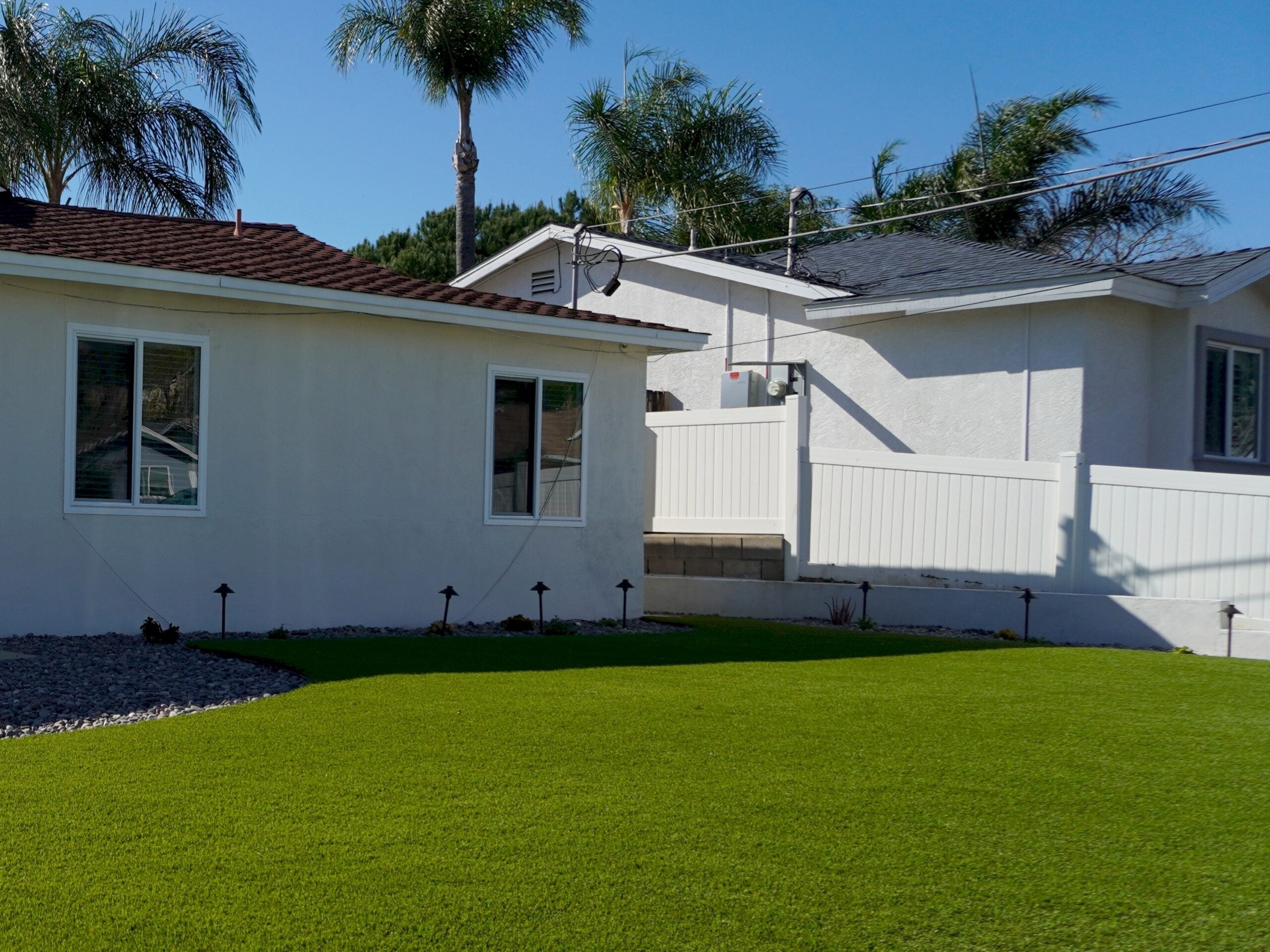
Every San Diego homeowner staring at a patchy, thirsty lawn eventually asks the same question: is artificial turf actually better than real grass, or just a trend everyone talks themselves into? The honest answer depends on how you use your yard, not which option sounds greener on paper. Here is a straight comparison instead of a sales pitch.
Both options have real strengths and real downsides, and neither is right for every yard. This guide walks through water and upkeep, the upfront and ongoing trade-off, how each handles heat, pets and kids, and the situations where real grass genuinely still wins, so you can decide with your eyes open instead of picking a side before you have the facts.
Water and Maintenance: the Reality, Not the Marketing
Real grass in San Diego needs regular watering to survive the county’s long dry stretches, and that demand does not pause just because water restrictions tighten in a given year. Mowing, edging, fertilizing and dealing with brown patches or grubs are ongoing tasks that do not stop once the lawn looks good, they simply continue on a schedule for as long as you keep real grass.
Artificial turf flips that equation. Once it is installed on a properly compacted base, there is no mowing, no fertilizing and no watering schedule to manage. Upkeep becomes occasional: rinsing off dust or pet waste, brushing the fibers now and then, clearing leaves. It is not zero maintenance, but it is maintenance measured in minutes a few times a month instead of a weekly commitment.
The Upfront and Ongoing Trade-off, in Plain Terms
Real grass costs very little to start: sod or seed and a working irrigation system is a fraction of what a full turf conversion runs. But that low starting point is misleading, because real grass keeps asking for money and time for as long as you own the yard, in water bills, mowing, fertilizer and the occasional reseed after a rough patch.
Artificial turf runs the opposite direction: it asks for meaningfully more upfront to cover base preparation, quality material and proper seaming, and then very little afterward. Whether that trade makes sense depends on how long you plan to stay in the house and how much you value not thinking about the lawn again. A short-term owner may never recoup the upfront investment; a long-term owner often comes out ahead.
Heat, Pets and Kids: How Each Surface Actually Behaves
Turf runs warmer than real grass on a hot, sun-exposed afternoon, there is no honest way around that fact. Lighter-colored fiber, some shade from a tree or structure, and a quick hose-down before the kids or dogs go out all help manage it, but a south-facing yard in full sun will feel it more than a shaded one.
For dogs, a proper pet turf system with fast drainage and deodorizing infill handles daily use far better than a real lawn takes a beating from paws and urine spots. For kids, turf holds up to constant traffic without the bare, worn patches real grass develops under a trampoline or a regular game of catch. Neither surface is unsafe for either group when it is installed correctly.
When Real Grass Still Wins
Real grass still makes sense for a yard that gets heavy, rough use from large dogs digging or a family that genuinely wants the cooler, softer feel of a living lawn underfoot on a summer evening. Some homeowners also simply prefer the look and feel of real grass and are willing to keep up the maintenance for it, and that preference is entirely reasonable.
Heavily shaded yards can also be a wash either way, since real grass struggles to grow thick in deep shade and turf still needs some airflow and light to stay clean and dry. In those spots, the right answer sometimes is neither, a groundcover or hardscape solution instead of forcing either grass or turf into a spot that fights it.
Our Honest Verdict
For most San Diego yards that see regular use, real sun and a desire to stop thinking about watering, artificial turf wins on maintenance and long-term water use, even with a meaningfully higher starting investment. For a yard with heavy shade, very large dogs or an owner who genuinely loves lawn care, real grass still holds its own.
There is no universal winner here, only a better fit for how your specific yard actually gets used day to day. A yard built for entertaining and low upkeep tends to lean toward turf, while a yard centered on gardening, pets that dig, or the simple feel of grass underfoot tends to lean the other way. That is the honest answer, and it is the one we will give you in person too.
Not sure which fits your yard? We offer a free in-home consultation where we look at your actual sun, soil and how the space gets used, then back our recommendation with a written, itemized quote either way.