
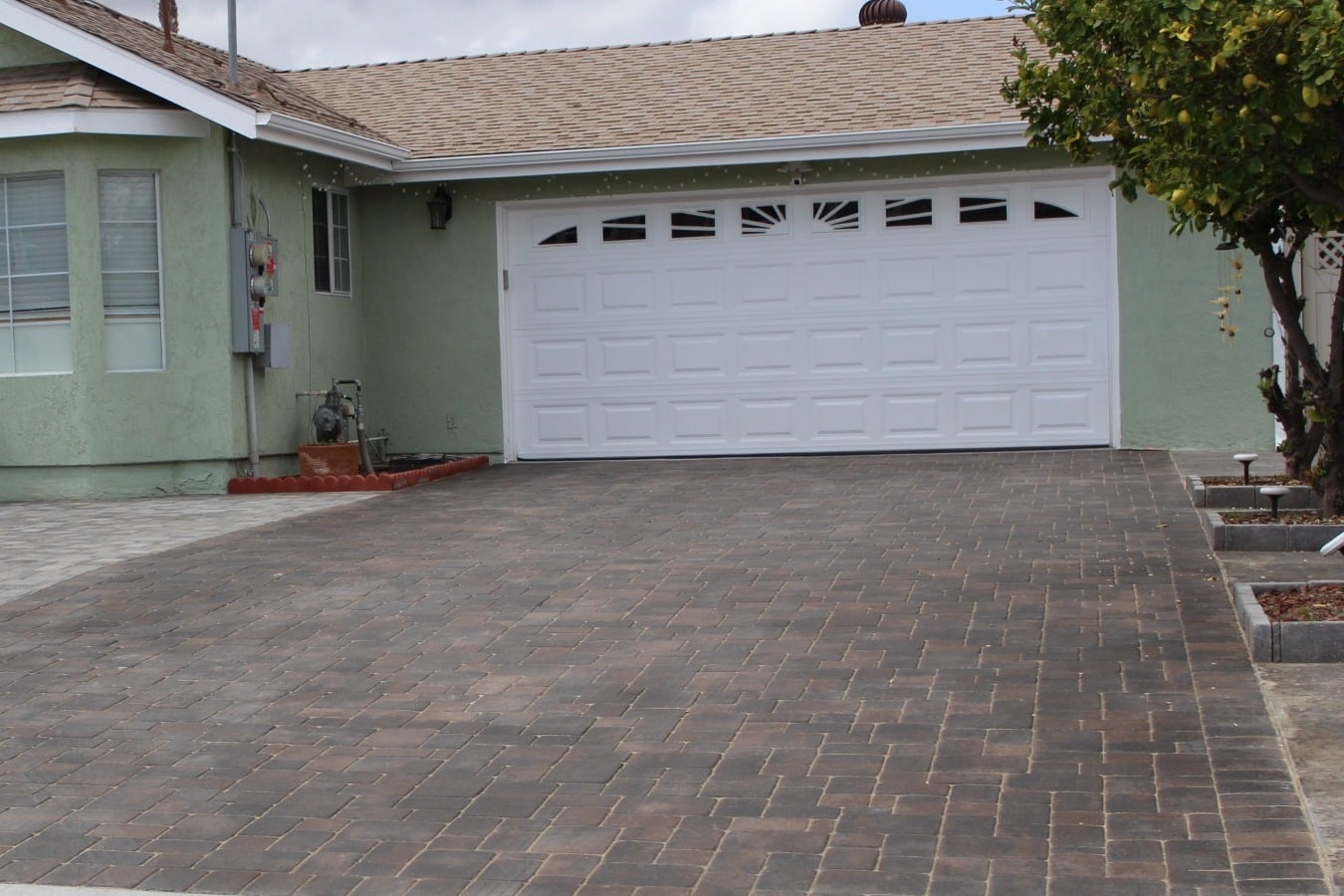
Pavers or poured concrete. It is one of the first questions every San Diego homeowner asks the moment a driveway project starts, and most of the answers online are either an advertisement for pavers or an oversimplified nod to whichever is cheaper. Both materials are legitimate choices used across the county for good reasons, and the right one depends on your specific driveway, not a universal winner.
This is a straight, side by side comparison: how each holds up over time, how each gets repaired when something goes wrong, how each looks against different home styles, and how San Diego’s soil and heat specifically affect each one. By the end you should know which way you are leaning, and exactly what to ask when you get quotes for both.
Durability and Repairability: The Real Difference
Both materials last decades when the base underneath is built correctly, so durability alone is not the deciding factor most people assume it is. The difference shows up in how each one fails. Poured concrete is a single continuous slab, so when it cracks, and expansive soil movement means most concrete eventually does, that crack is permanent and visible for the life of the driveway.
Pavers are individual units set on a flexible base, which means the field can move slightly with the soil beneath it without a visible crack forming. When a paver does chip, stain or settle, the fix is to lift the affected units, correct the base underneath, and reset them, and the repair disappears into the surrounding field. A concrete repair, by contrast, is a visible patch or a new section that rarely matches the weathered color of the original pour exactly.
Look and Curb Appeal
Concrete gives you one continuous, seamless surface, which reads as clean and modern, especially with a stamped pattern, exposed aggregate or an integral color mixed in rather than a topical stain. It suits contemporary and minimalist home styles particularly well, and there are no joint lines to compete visually with the architecture.
Pavers bring texture, pattern and the option of a contrasting border or apron that ties the driveway to the entry and the rest of the hardscape. They suit traditional, Spanish and craftsman style homes especially well, where a jointed surface feels more at home than a flat slab. Both materials take color, but pavers offer more range at once, since border, field and apron can each be a different tone or unit.
The Maintenance Reality Nobody Mentions Upfront
Concrete asks little of you day to day. No joints to keep sand in, no risk of ants or weeds finding a gap. What it does eventually need is sealing to resist oil and tire stains, since concrete is porous and absorbs what sits on it, and a stain left untreated becomes close to permanent.
Pavers need occasional joint sand top ups and benefit from sealing that deepens color and eases stain cleanup, though sealing is not strictly required for them to perform. The upside is that a stained or damaged paver can simply be pulled and swapped, which is not an option with a slab. Neither material is maintenance free, they just ask for different kinds of attention at different intervals.
The San Diego Soil and Heat Angle
San Diego County sits largely on expansive clay and decomposed granite, both of which shift with seasonal moisture more than most homeowners expect from a place with so little rain. A flexible paver system, built on a properly compacted base, moves with that soil instead of fighting it, which is the clearest advantage pavers hold in these specific conditions.
Heat matters too. Poured concrete can develop hairline cracks from thermal expansion during the hottest inland stretches of the year, particularly on larger, unbroken slabs without enough control joints. Pavers, being smaller units with joints between them, have more built in room to expand and contract without cracking. Coastal properties add one more variable: salt laden air accelerates wear on unsealed edge restraint, which matters more for pavers, since that restraint is what keeps the field from spreading.
The Honest Verdict, By Situation
If your driveway is a straightforward, gently sloped run to a garage and you want the lowest upfront cost with a clean, modern look, concrete is a reasonable, defensible choice. If you are on visibly expansive soil, want the option to repair invisibly down the road, or your home’s style leans traditional or Spanish, pavers earn their higher upfront cost.
If you park anything heavier than daily cars, an RV, a boat trailer, a work truck, that changes the base design conversation regardless of which material you pick, and it is worth mentioning upfront. There is no universally right answer here, only the right answer for your soil, your style and how you actually use the driveway, which is exactly what a site visit sorts out.
Not sure which way to go? Schedule a free in-home consultation and we will look at your soil, slope and style, then hand you a written, itemized quote for both pavers and concrete so you can compare the real numbers side by side.