
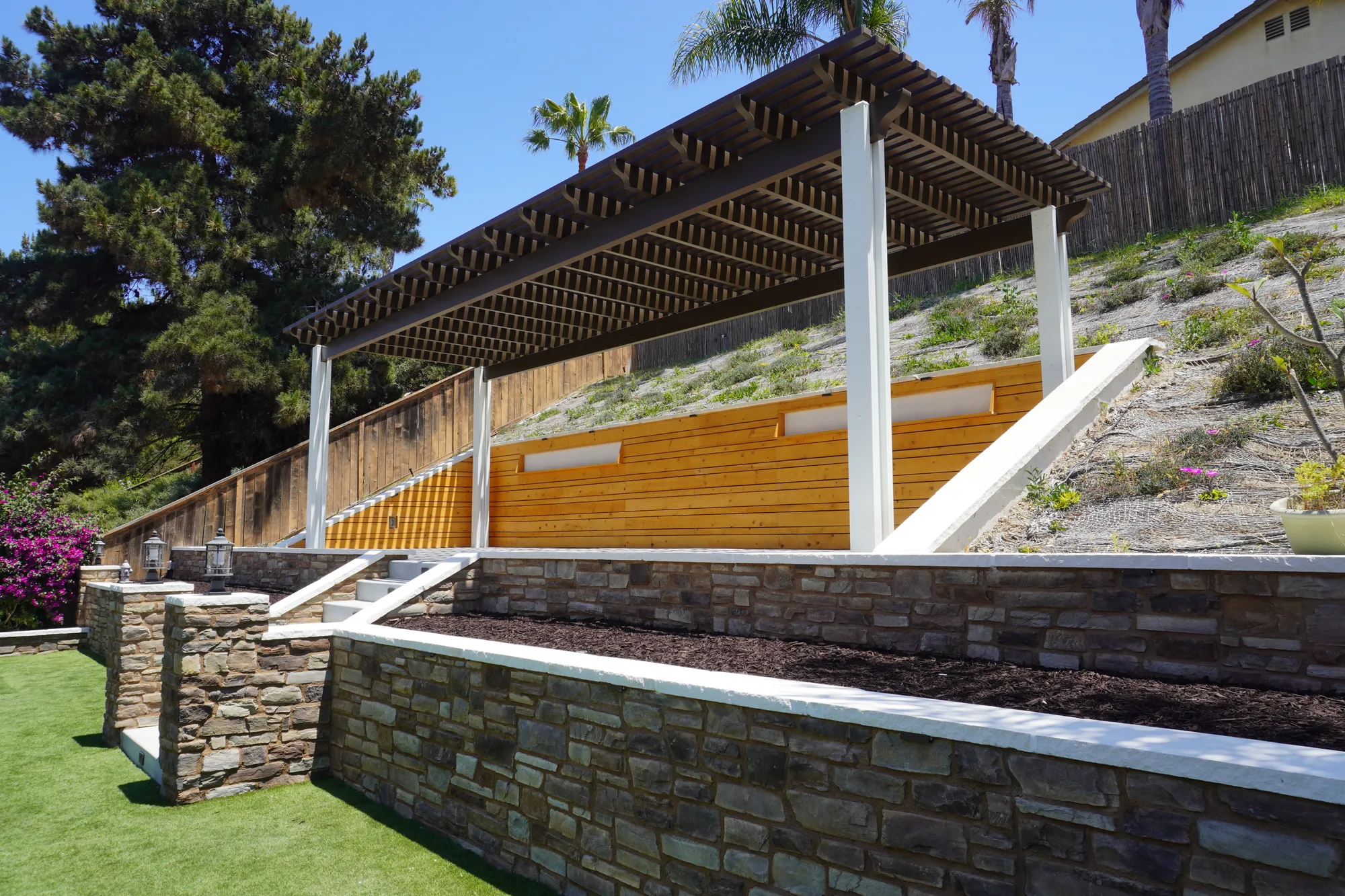
It is a fair question to ask before you spend anything. A backyard remodel is one of the larger projects a San Diego homeowner takes on, and unlike a kitchen or a bathroom, nobody discusses it in resale terms with much confidence. You will find plenty of articles willing to hand you a number and call the matter settled. This is not one of them, because the honest answer is that a backyard adds value in ways that depend heavily on your neighborhood, your eventual buyer, and what you actually choose to build back there.
What this guide gives you instead is the reasoning behind the answer. How San Diego’s climate changes what a yard is worth compared to most of the country, what buyers actually stop and look at when they walk out your back door, which parts of a backyard remodel tend to hold their value and which ones are really for you, and where additional spending stops adding anything at all. By the end you should be able to make the call yourself, with a realistic picture of what you are buying and why.
Why a San Diego Yard Counts for More Than It Would Elsewhere
In most of the country a backyard is a seasonal asset. It sits unused under snow or through humid stretches for a good part of the year, and a buyer walking a property in February is looking at a space they will not touch for months. San Diego does not work that way. The climate here keeps a yard usable for the large majority of the year, and buyers know it, because they are almost certainly already living that way in whatever house they are in now.
That changes how a yard reads on a listing. A finished outdoor space here is not an amenity appreciated in theory, it is square footage a family will genuinely use for dinners, birthdays, homework at a table outside and most weekends between spring and fall. Buyers weigh it against the indoor space rather than filing it away in a separate mental category of nice extras. That is the real reason backyard work tends to register more strongly with San Diego buyers than identical work would in a colder market.
It also means the bar is higher. In a market where most homes have some kind of usable outdoor space, a neglected yard stands out in the wrong direction, and a thoughtfully built one competes against other thoughtfully built ones rather than against nothing at all. Both of those facts point the same way: the yard matters here. What neither of them tells you is how much to spend on yours, which is where the rest of this gets specific.
What Buyers Actually Notice When They Walk Out Back
Ask any agent who has stood through enough open houses and you tend to hear the same short list. Buyers notice whether the space is usable, meaning whether there is flat, finished ground they can picture a table and chairs sitting on. They notice whether it looks maintained or whether it looks like a project waiting for them. And they notice the transition from the house to the yard, because a sliding door that opens onto a step down into dirt reads very differently from one that opens onto a patio at the same level.
What they tend not to notice, at least not the way homeowners expect, is the detail you agonized over. The specific paver blend, the exact turf pile height, the lighting scene you spent an evening programming. Those decisions matter enormously to how the yard feels to live in, and they are worth making well for that reason alone. They just are not what a buyer registers in the minute or two they spend out there. What registers is the overall impression: this is finished, this is usable, this will not cost me anything on day one.
Condition is doing more work in that impression than most people realize. A ten year old patio in good shape beside a clean, well planted border reads as cared for, while brand new hardscape surrounded by a struggling, patchy border reads as half done. That is why landscape design and the built elements are worth planning together rather than one after the other. A buyer standing out there sees one yard, not a hardscape project and a planting project that happened to share an address.
Which Improvements Hold Value, and Which Are Really for You
The improvements that tend to hold up in a sale are the ones that expand how the house can be used and appeal to almost everyone who walks through. Flat, finished patio space. A level lawn area, whether that is turf or grass. Drainage and grading that actually work. Retaining walls that turn a slope into something usable. Basic outdoor lighting and a shaded or covered spot to sit. None of these make for exciting reading, and all of them are things a buyer can picture using without having to share any of your hobbies.
Then there is the other category. A putting green, a large koi pond, an elaborate water feature, a highly specific collector’s garden, a built-in that only makes sense if you cook the way you cook. These are not mistakes. They are the reason plenty of people remodel in the first place, and a yard designed entirely around resale tends to be a yard nobody particularly enjoys. The honest framing is simply that they are personal, and a buyer who does not share the interest sees ongoing maintenance where you see a feature.
A useful test before you commit to something specialized: if the next owner did not want it, how hard would it be to remove or repurpose? A fire pit on a paver patio scores well on that question, since the patio underneath survives the decision. A pond plumbed into the middle of the lawn does not. That is not an argument against the pond. It is a way of knowing which side of the line you are standing on, and choosing it on purpose rather than by accident.
Where Over-Improving for the Neighborhood Starts Costing You
Every neighborhood has a ceiling, and it is set by what comparable homes around you sell for, not by what you spent building yours. You can finish a backyard that is genuinely better than anything within a mile, and a valuation will still stay anchored to the houses it can reasonably be compared against. Past a certain point, additional spending stops translating into anything a future sale reflects. Where that point sits varies enormously between a Rancho Santa Fe lot and a tract home in a newer development, which is exactly why a general rule is useless here.
The practical move is to get a sense of scale early, before the design conversation has built up momentum of its own. Our cost calculators put a starting price on the big pieces, like a paver patio or artificial turf, which is usually enough to tell you whether what you are picturing sits comfortably inside your neighborhood’s range or well above it. If you want to understand what actually moves the cost up and down, we covered the real cost drivers behind a backyard remodel separately.
None of this means you should build to the ceiling and stop there. Plenty of homeowners knowingly spend past what a sale would return, because they intend to be in the house for a decade and want the yard now rather than later. That is a completely defensible decision. It stops being defensible when it happens by accident, through a scope that crept upward one approval at a time with nobody ever naming the trade out loud. Decide it deliberately and the number stops feeling like a risk.
The Value You Get Long Before Any Sale
Resale is the wrong lens for most of this, and it is worth saying plainly. If you are listing in six months, a backyard remodel is a staging decision and deserves to be scoped like one, tightly and with the buyer in mind. If you are staying five, ten or twenty years, the yard is not an investment you are waiting to cash out. It is space you are buying back from your own house, and the return arrives every weekend you actually use it rather than on a single afternoon at a closing table.
That kind of value is harder to put on a spreadsheet and much easier to feel. It is the dinners you host because there is finally somewhere to host them. It is the kids outside instead of inside. It is not having to drive somewhere every time you want to be outdoors with people. Ask anyone a few years into a finished yard what they got out of it and you rarely hear a valuation figure. You hear about how much more they ended up using the back of the house than they expected to.
Framed that way, the question changes shape entirely. It is no longer whether the yard returns exactly what you put into it, it is whether the use you get out of it plus whatever it contributes at sale together justify the spend. For a long term owner in San Diego, where the yard stays usable most of the year, that combined answer tends to look considerably more favorable than the resale side of it would suggest on its own.
What to Ask a Real Estate Agent Before You Build
An hour with a local agent before you design anything is the cheapest research available to you, and most will give it willingly, because they would rather list a well planned house later. Ask what comparable homes in your immediate area have sold for recently, and how the ones with finished yards compared to the ones without. Ask what the ceiling in your specific pocket of the county looks like. That one conversation will tell you more about your own situation than any general article can, including this one.
Then get specific with them. Ask which backyard features they have watched buyers respond to in your neighborhood, and which ones they have watched buyers ignore or quietly treat as a negative. Ask whether a lack of usable outdoor space has held back listings nearby. Ask what they would personally skip if it were their own house. Agents see the same streets from the buyer side over and over, and most will be blunt once you make it clear you want the real answer rather than encouragement.
Then bring all of that back into the design conversation. An agent’s read on your neighborhood and a contractor’s read on your actual lot answer different halves of the same question, and the plan gets noticeably better when both are on the table before anything is drawn. It also protects you from the most common version of this mistake, which is designing the entire yard first and only afterward asking whether it fits the street it sits on.
Whether a backyard remodel makes sense for your house depends on your lot, your neighborhood and how long you plan to stay, and none of that gets answered from a photo. Schedule a free in-home consultation and we will walk your yard with you, talk through what is worth building and what is not, then put the whole scope into a written, itemized quote.